
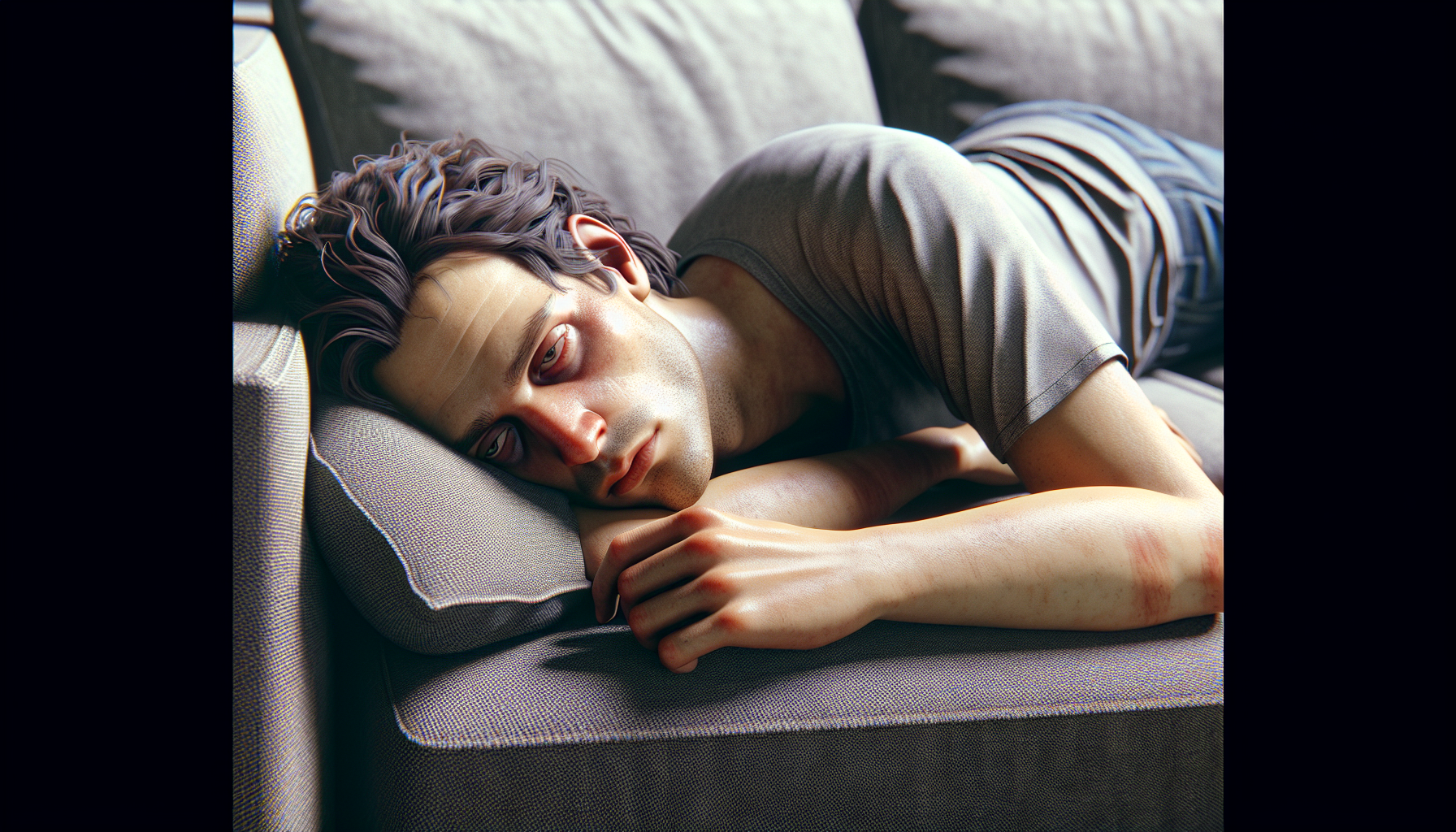
You survived the panic attack. And now you feel completely wiped out — like you just ran a 5K, sobbed through a movie, and then sat an exam, all back to back. Your body is heavy. Your mind is foggy. You might even feel a strange sadness you can’t quite explain.
If that sounds familiar, there is something important you need to hear first: you are not being dramatic. The exhaustion after a panic attack is real, measurable, and backed by biology. Your body just went through something genuinely intense, and what you are feeling right now is the aftermath of that.
This article explains exactly why your body feels so wrecked after a panic attack — and what you can do to help yourself recover faster.
What Actually Happens to Your Body During a Panic Attack
To understand the crash, you first need to understand the storm.
A panic attack is your body’s fight-or-flight response firing at full intensity — often with no real threat in sight. Your brain’s alarm system, the amygdala, sends out an emergency signal. Within seconds, your body mobilizes every resource it has to help you survive a danger that isn’t actually there.
Here is what happens physiologically in those minutes:
- Adrenaline and cortisol surge into your bloodstream, putting every system on high alert.
- Your heart rate spikes, sometimes reaching 150–180 beats per minute, to pump blood to your muscles fast.
- Your breathing accelerates, often leading to hyperventilation and a drop in carbon dioxide levels.
- Muscles throughout your body tense — especially in your chest, shoulders, jaw, and legs — bracing for impact.
- Non-essential systems shut down. Digestion pauses. Your immune response dials back. All energy goes to fight or flight.
- Blood sugar is rapidly burned as your body demands fuel for the perceived emergency.
All of this happens in a matter of seconds. It is extraordinarily taxing on your body. And it keeps running at that pitch for the duration of the attack — typically somewhere between 5 to 20 minutes, though it can feel much longer.
Understanding the full scope of panic attack symptoms helps clarify just how much your body is doing during those minutes — and why the aftermath hits so hard.
The Adrenaline Crash: Why You Feel Depleted Afterward
Think of adrenaline as rocket fuel. It is powerful, fast-acting, and burns through your system at a tremendous rate. When the threat signal finally quiets down, your body has to metabolize and clear all that adrenaline — and that process takes time and energy.
The result is what many people describe as “the crash.” As adrenaline levels fall, you may feel:
- Sudden, heavy fatigue — as if someone turned your energy off with a switch
- Shakiness or trembling, even though the attack is over
- A hollow, depleted feeling in your chest and limbs
- Difficulty concentrating or thinking clearly
- Low mood or emotional flatness
Cortisol — the other major stress hormone released during a panic attack — compounds this. Cortisol has a longer half-life than adrenaline, meaning it lingers in your system for hours after the attack ends. Elevated cortisol disrupts everything from your blood sugar regulation to your ability to feel calm and settled.
Your blood sugar also takes a hit. During the fight-or-flight response, your body rapidly burns glucose for energy. After the attack, blood sugar can dip, leaving you feeling shaky, lightheaded, and craving carbohydrates — all classic signs of a blood sugar crash.
This is not weakness. This is chemistry.
Muscle Tension and the Shaking Aftermath
During a panic attack, your muscles brace for impact. Your shoulders rise toward your ears. Your jaw clenches. Your hands may curl into fists. Your diaphragm locks up, making each breath feel like work.
This full-body muscular tension is exhausting on its own — imagine holding a plank position for 10 minutes straight. But it does not stop when the panic does.
After a panic attack, many people experience:
- Trembling or shaking — This is your nervous system and muscles releasing stored tension. It is actually a healthy, natural discharge mechanism.
- Soreness — Particularly in the chest, neck, jaw, and upper back. This can persist for hours or even into the next day.
- Headaches — Often caused by the jaw clenching, neck tension, and the blood pressure changes that occurred during the attack.
- Limb heaviness — Your arms and legs may feel like they are weighted down, a direct result of the muscular effort and subsequent depletion.
The hyperventilation that often accompanies panic attacks adds another layer. When you breathe too fast, carbon dioxide drops, which causes blood vessels to constrict and muscles to cramp. This can leave you feeling stiff, tingly, and genuinely sore after the fact.
Emotional Exhaustion and Cognitive Fatigue
The physical exhaustion is real — but so is the emotional toll, and it deserves just as much acknowledgment.
During a panic attack, your prefrontal cortex — the rational, thinking part of your brain — effectively goes offline. The emotional brain takes over completely. Terror, dread, a sense of losing control, a fear that something is catastrophically wrong: these are not minor feelings. They are survival-level emotional responses running at maximum intensity.
Once the attack passes, your brain has to work to come back online. Reorienting to reality — reassuring yourself that you are okay, making sense of what just happened, calming your nervous system — all of that takes cognitive effort and depletes mental energy.
Many people also experience:

- Emotional flatness or numbness — a kind of grey, muted feeling after the intensity
- Low mood or tearfulness — sometimes described as feeling sad without knowing exactly why
- Difficulty concentrating — brain fog that makes focusing on anything feel impossible
- Heightened anxiety about having another attack — which keeps the nervous system partially activated, preventing full rest
- A sense of embarrassment or shame — particularly if the attack happened in public or in front of others
This emotional and cognitive exhaustion is not separate from the physical fatigue — it is part of the same physiological response. Your brain is a physical organ, and running it in survival mode is genuinely draining.
If panic attacks are a recurring experience for you, it is worth understanding more about panic disorder — because the chronic low-level activation between attacks can compound this exhaustion significantly over time.
How Long Does the Exhaustion Last After a Panic Attack?
There is no single answer, because it varies from person to person and attack to attack. But here is a general picture of what recovery tends to look like:
First 30–60 minutes: This is usually the most intense part of the crash. Adrenaline is metabolizing, muscles are releasing tension, and the nervous system is trying to return to baseline. Fatigue, shakiness, and emotional rawness are most pronounced here.
1–3 hours after: Most people start to feel more physically stable. The shaking typically stops. Cognitive function begins to return. Some people feel an intense need to sleep — and if you can, resting during this window is genuinely beneficial.
The rest of the day: A lower-level tiredness often persists. You might feel more sensitive, more easily irritated, or just “off” for the remainder of the day. This is normal. Your nervous system took a real hit and it needs time to fully recover.
The next morning: For most people, a full night’s sleep goes a long way. Many wake up feeling significantly better. However, if panic attacks are frequent, the accumulated fatigue can build up over days or weeks, contributing to chronic tiredness that extends well beyond any single attack.
One important note: if you feel chest pain, significant shortness of breath, or severe physical symptoms after a panic attack that do not resolve within a reasonable time, it is always worth checking in with your doctor to rule out any underlying medical causes.
What Actually Helps You Recover Faster
You cannot skip the recovery process, but you can support your body through it more effectively. Here is what genuinely helps:
Drink water and eat something small. Your blood sugar likely took a hit and your body is slightly dehydrated from the rapid breathing and physical exertion. A small snack with some natural sugar and protein — fruit and nut butter, crackers and cheese, a banana — can help stabilize your system.
Breathe slowly and deliberately. Slow, controlled breathing — especially breathing out longer than you breathe in — directly activates the parasympathetic nervous system, which is the “rest and digest” counterpart to the fight-or-flight response. Try breathing in for 4 counts and out for 6–8 counts. Do this for a few minutes and you will notice your body start to physically settle.
Move gently. A slow walk, light stretching, or gentle yoga can help your body metabolize the remaining stress hormones and release the residual muscle tension. Intense exercise is not the goal here — gentle movement is.
Let yourself rest. If your body is asking for sleep, try to honor that. Your nervous system repairs itself during rest, and fighting the fatigue often prolongs it. Give yourself permission to lie down, even if you do not fully sleep.
Use warmth. A warm shower, a heating pad on tense muscles, or simply a warm drink can help signal safety to your nervous system and accelerate physical recovery. Warmth activates the parasympathetic system and encourages muscle release.
Be gentle with your expectations for the rest of the day. You went through something difficult. You do not need to immediately return to full productivity. If you can, lighten your load for a few hours and give your system the space to recover.
Avoid caffeine and alcohol. Both will work against recovery. Caffeine keeps your nervous system in a state of arousal and can trigger another attack. Alcohol may feel calming initially, but it disrupts sleep quality and can increase anxiety in the hours after consumption.
You Are Not Weak — You Are Human
If there is one thing to take from all of this, it is that the exhaustion you feel after a panic attack is not a sign that something is wrong with you, or that you are somehow failing at managing your anxiety. It is the predictable, biological result of your body running its most powerful emergency system at full capacity.
Feeling exhausted after a panic attack means your body did exactly what it was designed to do. The crash is not a weakness. It is the cost of survival mode — and it passes.
What matters most right now is giving yourself the same compassion you would offer a friend. You went through something hard. Your body needs to recover. Let it.
If panic attacks are happening frequently and the cumulative exhaustion is affecting your quality of life, that is a signal worth paying attention to — not to alarm you, but because effective help exists. Understanding what is driving the attacks is the first step toward making them less frequent and less overwhelming over time.
.pp-infographic { font-family: -apple-system, BlinkMacSystemFont, ‘Segoe UI’, sans-serif; max-width: 720px; margin: 2em auto; background: #f9f6ff; border-radius: 12px; overflow: hidden; box-shadow: 0 2px 16px rgba(90,60,150,0.10); } .pp-infographic-header { background: #ede6ff; color: #2d1f4e; padding: 20px 28px 16px; border-left: 5px solid #4a2c7a; } .pp-infographic-header h3 { margin: 0 0 4px; font-size: 1.15rem; font-weight: 700; letter-spacing: 0.01em; color: #2d1f4e !important; } .pp-infographic-header p { margin: 0; font-size: 0.82rem; color: #5a3c96 !important; } .pp-cards { display: grid; grid-template-columns: 1fr 1fr; gap: 0; } .pp-card { padding: 20px 22px; border-bottom: 1px solid #ebe4f7; border-right: 1px solid #ebe4f7; } .pp-card:nth-child(even) { border-right: none; } .pp-card:nth-last-child(-n+2) { border-bottom: none; } .pp-card-label { font-size: 0.68rem; font-weight: 700; text-transform: uppercase; letter-spacing: 0.08em; color: #9b7fd4; margin-bottom: 4px; } .pp-card-title { font-size: 0.97rem; font-weight: 700; color: #2d1f4e; margin-bottom: 12px; } .pp-row { margin-bottom: 9px; } .pp-row-label { font-size: 0.7rem; font-weight: 700; text-transform: uppercase; letter-spacing: 0.06em; color: #7a6a99; margin-bottom: 2px; } .pp-row-value { font-size: 0.82rem; color: #3d2d60; line-height: 1.4; } .pp-badge { display: inline-block; background: #ede6ff; color: #5a3c96; border-radius: 20px; padding: 2px 10px; font-size: 0.72rem; font-weight: 600; margin-top: 6px; } .pp-infographic-footer { padding: 10px 28px; font-size: 0.72rem; color: #9b7fd4; text-align: center; border-top: 1px solid #ebe4f7; background: #f2ecff; } @media (max-width: 520px) { .pp-cards { grid-template-columns: 1fr; } .pp-card { border-right: none; } .pp-card:nth-last-child(-n+2) { border-bottom: 1px solid #ebe4f7; } .pp-card:last-child { border-bottom: none; } }Why You Feel Exhausted After a Panic Attack
The biology behind the crash — six physiological mechanisms explained
Join the Weekly Breath
Get calm, evidence-based tools for panic and anxiety, plus updates when new PanicPeace emails go live. No spam. Unsubscribe anytime.