

The first time I had a panic attack while driving, I was on a completely ordinary stretch of highway. No traffic, good weather, familiar route. My heart shot into my throat, my hands went numb, and the thought that arrived — loud and certain — was: I’m going to crash this car and die.
I didn’t crash. I pulled over, sat there shaking for ten minutes, and then drove home. But for months after that, I found reasons not to drive on highways. Then on bridges. Then on roads more than a few miles from home.
That’s the thing about panic attacks while driving: the panic itself rarely lasts more than ten minutes. The avoidance that follows can last years.
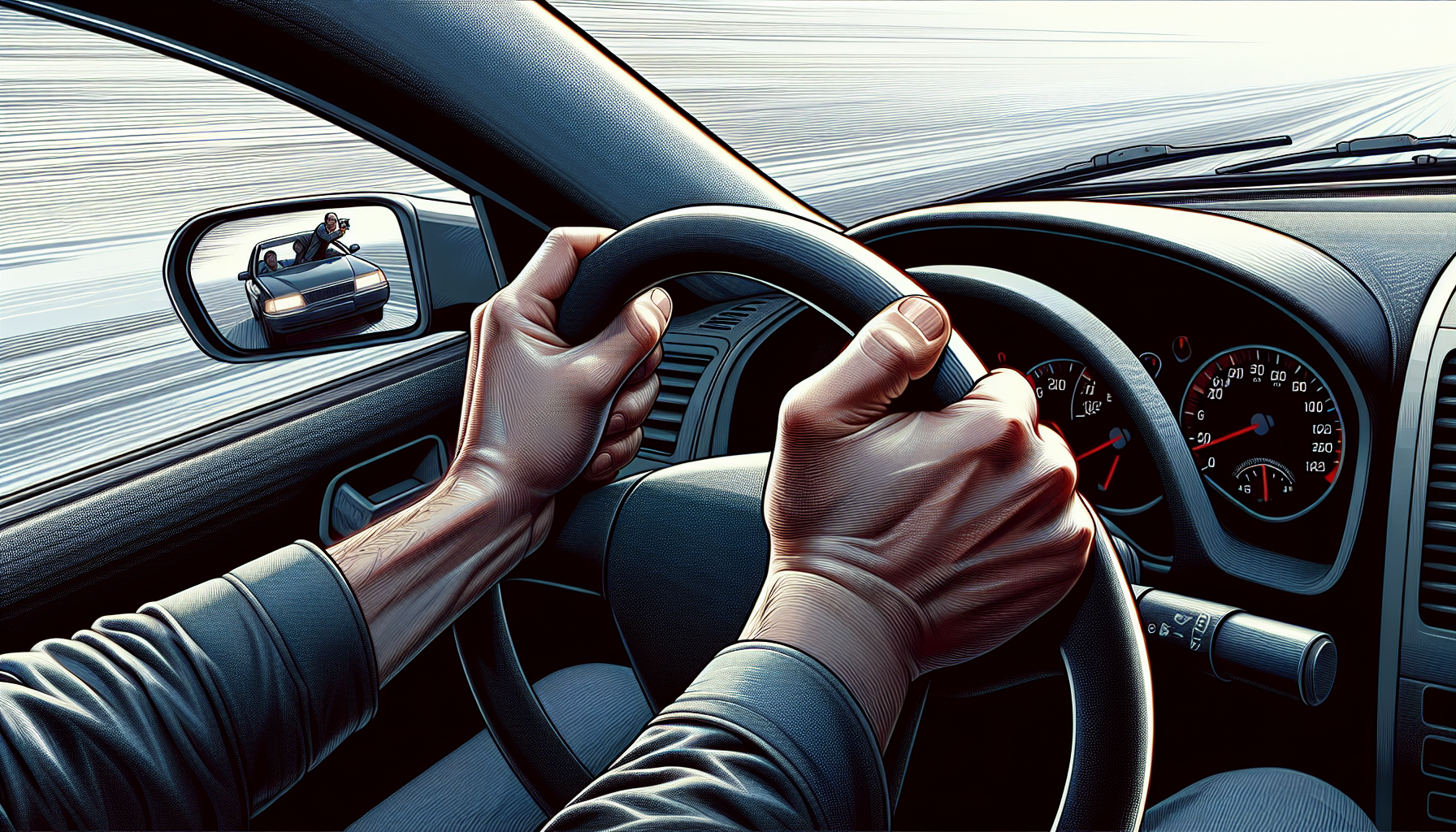
This article covers both problems — what to do in the moment when panic hits while you’re behind the wheel, and how to stop the fear from quietly taking over your driving life.
Why Driving Triggers Panic Attacks
Driving isn’t randomly chosen by the anxious brain. There are very specific reasons it’s one of the most common settings for panic attacks.
You’re Trapped (or Feel Like It)
Driving shares a lot of structural features with other high-panic environments: elevators, airplanes, tunnels. You can’t easily exit. You’re enclosed. If something goes wrong internally — if your body starts doing something frightening — you can’t just walk away.
The perceived entrapment is often enough. You don’t have to actually be unable to escape. Your nervous system responds to the feeling of being locked in, and on a highway at 70 mph with traffic on both sides, that feeling is reasonable. The problem is when the brain interprets that normal situational reality as a threat.
You Feel Like You’re Not in Control
This one trips people up because, technically, you are in control — you’re the one driving. But perceived control and actual control aren’t the same thing. During a panic attack, your sense of bodily control feels destabilized. Your hands might feel strange, your vision might go slightly tunnel-like, your legs might feel weak. In any other setting, those sensations are unpleasant but tolerable. In a car, they feel catastrophic.
The anxious brain does a rapid threat assessment: I feel strange. I’m operating a moving vehicle. Other people are at risk. This is an emergency. The conclusion feels logical in the moment. It isn’t — but it feels that way.
The Stakes Feel Sky-High
Panic attacks are more likely to occur in high-stakes environments, and driving genuinely is one. The consequences of losing control of a vehicle are real. That’s not irrational. What the anxious brain does is take a real (but very small) statistical risk and amplify it into a near-certain catastrophe.
Cognitive behavioral research consistently shows that panic disorder involves catastrophic misinterpretation of physical sensations — treating the pounding heart or dizziness of anxiety as proof that something medically terrible is happening, rather than as anxiety symptoms (Clark, 1986). Driving gives that misinterpretation particularly vivid material to work with.
What to Do If You Have a Panic Attack While Driving
This section is the practical core. If you’re reading this because you’re trying to prepare, or because you just had an episode and want to know what to do next time, here’s the protocol.
Step One: Pull Over Safely
Do not white-knuckle it. Do not try to “push through” while maintaining highway speed. The goal is to give your nervous system permission to discharge, and you cannot do that while managing traffic.
Here is how to pull over without making things worse:
On a highway or freeway: – Signal into the right lane first. Do this early, before you feel too overwhelmed to signal. – Move one lane at a time. Don’t cut across three lanes. – Aim for an exit ramp, a rest stop, or a wide highway shoulder. A proper pull-off is safer than stopping in a narrow shoulder with traffic passing at speed. – If you can’t reach an exit, the right shoulder is your next option. Signal, check your mirror, and move over gradually. Put on your hazard lights immediately once stopped. – Turn on your hazard lights as soon as you’re off the road.
In city driving: – A parking lot is your best option. If you’re near one, signal and pull in. – A side street off a main road works well — less traffic noise, easier to settle. – If you’re at a light when panic peaks, you can sit through one light cycle. You don’t need to pull over from a stopped position — wait until you can safely move to a side street or lot.
Once stopped: – Shift into park. Turn off the engine if it helps. – Unlock the doors if you feel trapped. – Put your seat back slightly if possible. – Let the panic happen. Don’t fight it.
This last point matters more than anything else.
Step Two: Let It Peak and Pass
Panic attacks follow a physiological arc. Adrenaline surges, peaks, and then the body clears it. The clinical research on panic is unambiguous: a panic attack, left alone, will peak within 5–10 minutes and subside (Barlow, 2002).
The behaviors that extend panic — white-knuckling, checking your pulse, trying to distract yourself desperately, catastrophic self-talk — keep the adrenaline system activated. The fastest way through a panic attack is to stop trying to stop it.
Once pulled over, the most useful thing you can do is slow your breathing. Not to eliminate the panic, but to signal to your nervous system that you’re not actually in danger. Slow, extended exhales activate the parasympathetic nervous system and can shorten the duration of the peak. See breathing techniques for panic attacks for specific techniques that work well in this situation.
A grounding exercise is useful here too — something that anchors your attention to the present physical environment rather than the catastrophic mental narrative. The 5-4-3-2-1 grounding technique is particularly good in cars because you can do it with your eyes open.
For a broader look at managing the moment, how to stop a panic attack covers the full toolkit.
Step Three: Decide Whether to Continue Driving
Once the acute episode passes, you have a choice to make. There’s no universally correct answer, but here’s the framework I use:
Continue driving if: You feel like the panic has passed (not just suppressed), you’re not significantly disoriented, and continuing the drive is low-stakes (familiar route, short distance, not rush hour traffic).
Don’t continue driving if: You feel another wave coming, you’re significantly disoriented, or you feel like you’d be driving while bracing against panic the entire time. If in doubt, call someone to pick you up or take a break until you’re genuinely settled.
Driving through persistent panic is not courage. It’s just harder than it needs to be, and it can sensitize you to driving even more.
Why You Won’t Crash: The Physiology Explained
This is the thing I wish someone had told me clearly in the early years: panic does not impair the motor function required to drive.
Panic activates the sympathetic nervous system — the fight-or-flight response. This system is ancient and was designed to help you survive physical threats. What it does is increase physical readiness, not decrease it. Reaction time actually sharpens. Motor coordination is maintained. The body prepares to fight or flee.
The symptoms that feel like impairment — the tunnel vision, the strange feeling in your hands, the leg weakness — are not neurological dysfunction. They’re features of the stress response:
- Tunnel vision is the result of pupil dilation and attention narrowing. It feels alarming but doesn’t impair your ability to track the road.
- Tingling or numb hands is caused by hyperventilation slightly changing blood CO2 levels, which causes peripheral vasoconstriction. Unpleasant. Not dangerous. Not a sign you can’t steer.
- Leg weakness or jelly legs is a sensation produced by blood redirecting to major muscle groups. Your legs can still operate the pedals.
The fear that you’ll pass out and crash is also extremely unlikely. Fainting (vasovagal syncope) is caused by lowered blood pressure. Panic produces elevated blood pressure. The physiological conditions for fainting and the physiological conditions for panic are essentially opposite (Craske & Barlow, 2007).
This doesn’t mean you should stay on the road through a severe panic attack. It means the reason to pull over is to let the panic pass comfortably, not because you’re genuinely about to crash.
Highway vs. City Driving: Why They Feel Different
People often find that panic is stronger on highways than in city driving, and for understandable reasons.
Highways feel more trapped. There are fewer exits. Speeds are higher, which raises perceived stakes. You can’t just pull into a parking lot. The inability to easily escape amplifies the panic response in people who are already sensitized.
City driving usually allows for more escape routes, which can lower anticipatory anxiety. But stop-and-go traffic creates its own triggers — the feeling of being hemmed in, surrounded by cars, unable to move.
Neither environment is objectively safer from a panic standpoint. The triggers are different, and what bothers you most will depend on your particular anxiety profile. If highways are your main trigger, the gradual exposure work described below should start there, working up from lower-speed roads to interstates.
Anticipatory Anxiety: The Fear Before the Drive

A lot of driving-related panic doesn’t happen on the road. It happens in the driveway, or the night before a drive, or while thinking about an upcoming trip.
Anticipatory anxiety is the anxious brain running disaster simulations. It’s trying to protect you by getting you ready. What it actually does is prime your nervous system before you’ve even turned the key, so by the time you’re merging onto the highway, your baseline arousal is already elevated. You’re starting at a higher point on the anxiety curve, which means panic threshold is lower.
Some things that help with anticipatory anxiety specifically:
- Don’t rehearse catastrophes. When your brain offers you an image of swerving into traffic, notice it as a thought, not a prediction, and redirect attention.
- Prepare practically rather than mentally. Check your route, know where rest stops are, have water in the car. Practical preparation is different from anxious rumination.
- Accept uncertainty explicitly. You cannot guarantee the drive will be fine. No one can. What you can do is trust that you have skills to handle discomfort if it arises.
The Avoidance Spiral (and Why It Always Makes Things Worse)
Avoidance is the most understandable response to panic attacks while driving. You had a frightening experience. You avoid the trigger. You feel better in the short term.
But here is what happens: every time you avoid driving somewhere, your brain updates its threat model. It registers the avoidance as confirmation that the avoided situation was genuinely dangerous. The fear becomes more entrenched. The avoided territory grows — first highways, then unfamiliar roads, then any driving more than a few miles from home.
This is the avoidance spiral, and it’s well-documented in the anxiety literature. Avoidance maintains anxiety disorders rather than resolving them (Salkovskis, 1991). The brain needs disconfirmation — it needs to experience the feared situation without the catastrophe occurring — in order to update its threat assessment.
You cannot talk yourself out of driving phobia. You have to drive through it, carefully and systematically.
Gradual Exposure: How to Get Back on the Road
Exposure therapy has the strongest evidence base of any treatment approach for specific phobias and panic disorder with agoraphobia (Craske et al., 2014). Applied to driving, it means systematically re-entering the avoided situations, starting from the least frightening and working toward the most.
A basic exposure hierarchy for driving might look like this:
- Sitting in a parked car in your driveway (engine off)
- Sitting in the car with the engine running
- Short drive around the block in a quiet neighborhood
- Slightly longer drive on familiar local roads
- Driving during off-peak hours on a busier road
- Short highway entrance ramp and exit
- One or two highway exits, low traffic
- Longer highway driving, off-peak
- Highway driving during moderate traffic
- Long-distance drives, unfamiliar routes
The key principles: – Stay at each level until anxiety is tolerable (not zero — tolerable). – Don’t skip steps. – If a step produces severe panic, drop back one level and build from there. – Do each step multiple times before advancing.
This is slow. It takes weeks, sometimes months. But it works — and unlike avoidance, it compounds in the right direction.
Long-Term Management
Driving panic doesn’t usually resolve with a single intervention. For most people, it’s managed through a combination of:
CBT (Cognitive Behavioral Therapy): Specifically interoceptive exposure (learning to tolerate anxiety sensations) and cognitive restructuring (correcting catastrophic interpretations). This is the gold standard. If driving panic is significantly limiting your life, working with a CBT therapist is worth the investment.
Medication: Some people use low-dose SSRIs or SNRIs as part of a broader treatment plan. Beta-blockers are sometimes prescribed for situational use. This is worth discussing with your doctor. Benzodiazepines for driving panic specifically warrant a careful conversation about impairment risks — some medications that treat anxiety can themselves affect driving.
Regular practice: Driving avoidance worsens over time; driving regularly, even when uncomfortable, helps maintain the neural learning that the road is safe.
Lifestyle foundations: Sleep deprivation and caffeine both lower panic threshold measurably. These aren’t glamorous interventions, but they’re real ones.
Frequently Asked Questions
Can a panic attack actually cause you to crash?
The clinical research suggests this is extremely rare. Panic activates the fight-or-flight response, which maintains motor function and reaction time — it doesn’t impair them. The sensations that feel like impairment (tingling hands, tunnel vision, weak legs) are physiological artifacts of the stress response, not neurological dysfunction. Pulling over is still the right move, but the reason is comfort, not because you’re genuinely about to lose vehicle control.
What’s the difference between a panic attack and a medical emergency while driving?
Panic attacks produce symptoms that feel medical but resolve completely, typically within 10–20 minutes, with no lasting physical harm. Genuine cardiac events or strokes involve symptoms that don’t resolve — worsening chest pain, arm pain radiating down the left side, facial drooping, loss of speech. If you’re unsure, always err toward calling 911 or getting medical attention. If you’ve had multiple driving panic episodes and a doctor has evaluated you, you likely already know what you’re dealing with.
Why does panic always seem to hit on highways and not local roads?
Highways combine the strongest panic triggers: high perceived stakes, enclosed/trapped feeling, fewer escape routes, higher speeds. Your nervous system registers those contextual cues and adds them to its threat calculation. Local roads offer more perceived exit options, which reduces the trapped feeling and lowers baseline anxiety. This is also why exposure work for highway panic specifically needs to be gradual and deliberate.
Should I take medication before driving if I have driving anxiety?
This is a conversation to have with your prescribing doctor. Some anxiety medications can impair driving — benzodiazepines in particular carry clear warnings about operating vehicles. SSRIs and SNRIs taken as a daily medication generally do not impair driving once stabilized. Using medication as a pre-driving ritual can also create dependency on the medication rather than building genuine tolerance to anxiety, which is worth discussing with a therapist.
How do I tell my passengers I need to pull over?
Honestly and directly: “I’m feeling anxious and I need to pull over for a few minutes.” You don’t owe a detailed explanation. Most passengers, told calmly that you need a moment, will simply accept it. If you’re worried about judgment, remember that pulling over when you feel unwell is the responsible, safe choice — the kind of thing a careful driver does.
Does driving anxiety get worse over time if I don’t address it?
Generally, yes. Anxiety disorders maintained by avoidance tend to expand their territory over time. What starts as highway avoidance can gradually include bridges, tunnels, unfamiliar cities, any drive over a certain distance. Addressing it early — through exposure, therapy, or both — produces better outcomes than hoping it resolves on its own.
Can I develop driving panic even if I’ve driven for years without a problem?
Yes, and this is very common. A panic attack can occur during driving for the first time after years of uneventful driving, often during a period of elevated stress or anxiety. The brain then associates the driving context with danger. There’s nothing wrong with your brain or your driving ability — it’s a learning process that can be unlearned through deliberate exposure.
What do I do if I’m alone on the highway and panic hits and I can’t pull over safely?
Slow down slightly if it’s safe to do so. Stay in the right lane. Your goal is a safe pull-off — an exit, a rest area, a wide shoulder. Keep signaling. Breathe slowly. Remind yourself that the sensations you’re feeling are anxiety, not incapacitation. Focus on the physical task of driving — hands on the wheel, eyes tracking the road — rather than on the internal sensations. Most highways have exits within two to three miles. You can get there.
Sources
Clark, D. M. (1986). A cognitive approach to panic. Behaviour Research and Therapy, 24(4), 461–470. https://doi.org/10.1016/0005-7967(86)90011-2
Barlow, D. H. (2002). Anxiety and its disorders: The nature and treatment of anxiety and panic (2nd ed.). Guilford Press.
Craske, M. G., & Barlow, D. H. (2007). Panic disorder and agoraphobia. In D. H. Barlow (Ed.), Clinical handbook of psychological disorders (4th ed., pp. 1–64). Guilford Press.
Salkovskis, P. M. (1991). The importance of behaviour in the maintenance of anxiety and panic: A cognitive account. Behavioural Psychotherapy, 19(1), 6–19. https://doi.org/10.1017/S0141347300011472
Craske, M. G., Treanor, M., Conway, C. C., Zbozinek, T., & Vervliet, B. (2014). Maximizing exposure therapy: An inhibitory learning approach. Behaviour Research and Therapy, 58, 10–23. https://doi.org/10.1016/j.brat.2014.04.006
Kessler, R. C., Chiu, W. T., Jin, R., Ruscio, A. M., Shear, K., & Walters, E. E. (2006). The epidemiology of panic attacks, panic disorder, and agoraphobia in the National Comorbidity Survey Replication. Archives of General Psychiatry, 63(4), 415–424. https://doi.org/10.1001/archpsyc.63.4.415
Note on unverified claims: The statement about panic attacks peaking within 5–10 minutes is widely cited in clinical literature and consistent with diagnostic criteria for panic disorder (DSM-5-TR criteria specify that attacks peak within minutes), but the precise “10-minute” figure varies across sources. The claim that panic produces elevated rather than lowered blood pressure — and therefore the fainting mechanism is not active during panic — is physiologically accurate and supported by the Craske & Barlow (2007) reference above, but readers with cardiac concerns should consult a physician rather than relying on this distinction alone.
Join the Weekly Breath
Get calm, evidence-based tools for panic and anxiety, plus updates when new PanicPeace emails go live. No spam. Unsubscribe anytime.