

You were just sitting there. Maybe watching TV, eating lunch, or lying in bed about to fall asleep. Nothing was wrong. Nothing was scary. And then — out of nowhere — your heart started racing, your chest tightened, and a wave of pure terror washed over you. No warning. No reason. Just panic.
If this sounds familiar, I want you to know something important: you are not losing your mind, and you are not alone. Panic attacks out of nowhere are one of the most disorienting experiences a person can have, precisely because they defy our basic logic. We expect fear to have a cause. When it doesn’t seem to, the panic itself becomes the thing we fear — and that fear can grow into something that shapes your entire life.
I’ve been there. And what helped me most was understanding why panic attacks seem to appear from nowhere — because once you understand the mechanism, they stop feeling so random. They stop feeling so out of control. In this article, I want to walk you through the science and the practical steps that can genuinely make a difference.

Why Do Panic Attacks Seem to Come From Nowhere?
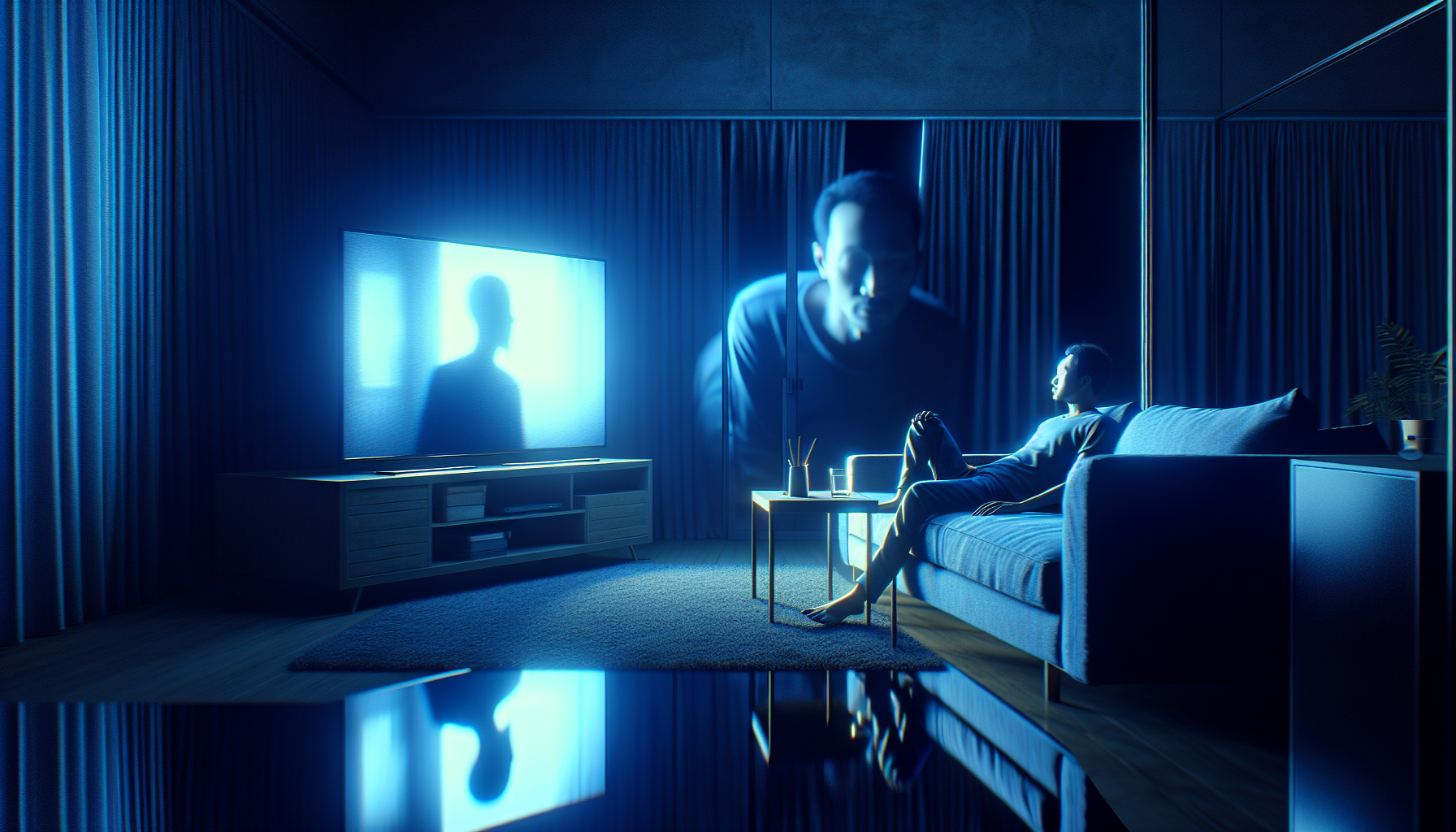
The short answer: they don’t actually come from nowhere. They only feel that way. Here’s what’s really happening beneath the surface.
Your Nervous System Is Already on High Alert
Think of your nervous system like a smoke alarm. A well-calibrated alarm goes off only when there’s real smoke. But after a few false alarms — or after being exposed to chronic stress — the alarm becomes sensitized. It starts firing at the smell of burnt toast. Or at nothing at all.
This is what researchers call a sensitized nervous system. When you’ve experienced panic attacks before, your brain’s threat-detection center (the amygdala) becomes hypervigilant. It starts scanning your body and environment for danger signals — and it doesn’t need much to pull the trigger. A slight uptick in heart rate. A moment of lightheadedness. A feeling in your chest you can’t quite name. Any of these can be enough to launch a full-scale panic response.
Subclinical Stress Accumulation
Here’s something that surprised me when I first learned it: panic attacks out of nowhere are often the result of stress that has been building for days or weeks below your conscious awareness. You don’t feel “stressed” in any dramatic way. But your body has been quietly keeping score.
Poor sleep, skipped meals, too much caffeine, low-grade work pressure, a nagging worry you’ve been pushing aside — none of these feel catastrophic on their own. But together, they raise your baseline arousal level. By the time a panic attack hits, your nervous system has been quietly running in emergency mode for days. The attack isn’t random; it’s the overflow.
Interoceptive Conditioning
There’s another fascinating mechanism at work: interoceptive conditioning. This is when your brain learns to associate normal bodily sensations — a faster heartbeat after climbing stairs, warmth after a hot drink, a slightly dizzy feeling when you stand up quickly — with the danger signal of a panic attack.
Once that association is formed, those ordinary sensations can trigger panic even when you’re calm and safe. You’re not panicking because something is wrong. You’re panicking because your body noticed something that once preceded panic, and it’s trying to protect you. It’s a misfiring of a protective instinct — not a sign that something is medically wrong with you.
Common Hidden Triggers for Panic Attacks Out of Nowhere

Even when panic feels completely unprovoked, there are often identifiable contributors. Learning to spot these in your own life is one of the most empowering things you can do.
- Sleep deprivation. Even one or two nights of poor sleep significantly increases amygdala reactivity. Your threat-detection system becomes far more hair-trigger when you’re running on less than seven hours. If your “random” panic attacks cluster around periods of bad sleep, this is likely a key factor.
- Caffeine. Caffeine directly stimulates the sympathetic nervous system — the same system that drives the fight-or-flight response. For people prone to panic, caffeine can produce physical sensations (racing heart, jitteriness, shallow breathing) that are nearly indistinguishable from early panic. If you’re having unexplained panic attacks, your morning coffee or afternoon energy drink deserves a close look.
- Hormonal fluctuations. Many women notice that panic attacks cluster around specific points in their menstrual cycle — particularly in the premenstrual phase, when progesterone drops and the nervous system becomes more reactive. Perimenopause and postpartum periods are also common times for out-of-nowhere panic attacks to appear or intensify. Hormones are a hugely underappreciated trigger.
- Stress accumulation. As I mentioned above, the panic attack you have on a quiet Tuesday evening may actually be the culmination of two weeks of low-grade stress. Your nervous system doesn’t always discharge tension in real time. Sometimes it holds it until it can’t anymore.
- Places and situations with past associations. This one is subtle but powerful. If you once had a panic attack in a specific location — a grocery store, a particular highway, a work meeting room — your brain may have filed that place away as “dangerous.” Returning to it, even years later, can trigger panic without you consciously connecting the dots.
- Alcohol and substance use. The rebound effect after drinking — when alcohol leaves your system and your nervous system rebounds with heightened activity — is a common and overlooked trigger for nighttime and early morning panic attacks.
Unexpected vs. Expected Panic Attacks: What the Research Says
Clinically, panic attacks are classified into two types: expected (cued) and unexpected (uncued). Expected panic attacks occur in response to a known trigger — like a feared situation or object. Unexpected panic attacks seem to come out of the blue, with no obvious cue at the time.
The DSM-5-TR defines panic disorder partly by the presence of recurrent unexpected panic attacks. Research suggests that unexpected attacks tend to feel more severe and more frightening, in large part because the absence of an obvious cause makes people fear that something is seriously medically wrong — heart attack, stroke, neurological problem.
But here’s what the research also consistently shows: with careful tracking and assessment, most “unexpected” panic attacks turn out to have identifiable contributors — they just weren’t obvious at the moment of the attack. A landmark study published in the Journal of Abnormal Psychology found that even attacks reported as spontaneous were often preceded by subtle physiological changes and preceding stressors that hadn’t been consciously registered.
This is actually good news. It means that panic attacks out of nowhere are not truly random — which means they can be understood, anticipated, and reduced.
What to Do When a Panic Attack Hits With No Warning
When panic strikes without warning, the first few seconds are the most critical — because how you respond in those seconds determines whether the panic escalates or begins to resolve. Here’s what I’ve found most effective, and what the evidence supports.
1. Recognize It and Name It
The moment you realize what’s happening, say it to yourself — out loud if you can: “This is a panic attack. It is not dangerous. It will pass.” This sounds almost too simple, but naming the experience activates your prefrontal cortex (the rational brain) and begins to counteract the amygdala’s alarm response. Panic feeds on uncertainty. Naming it cuts off that fuel supply.
2. Don’t Fight It — Allow It
This is counterintuitive, but fighting a panic attack almost always makes it worse. Resistance creates tension, and tension amplifies every sensation. Instead, try to adopt an attitude of allowing: “Okay, this is here. I don’t like it, but I don’t have to fight it.” This approach — sometimes called “acceptance” in anxiety treatment — has strong research support. The panic wave crests and falls much faster when you stop struggling against it.
3. Use Extended Exhale Breathing
Slow, controlled breathing with a longer exhale than inhale directly activates the parasympathetic nervous system — your body’s built-in calming response. Try inhaling for 4 counts and exhaling for 6 to 8 counts. Don’t force the breath; keep it gentle. Even a minute of this can begin to shift your physiology out of fight-or-flight.
4. Ground Yourself in the Present
Panic pulls your attention inward and forward — into your body sensations and fearful “what ifs.” Grounding techniques redirect your attention to the present moment and your immediate surroundings. The classic 5-4-3-2-1 technique works well: name 5 things you can see, 4 you can touch, 3 you can hear, 2 you can smell, 1 you can taste. It sounds basic, but it works by engaging the sensory cortex and giving your attention somewhere else to go.
5. Stay Where You Are
If at all possible, resist the urge to flee the situation you’re in. Escape brings immediate relief — but it also teaches your brain that the situation was truly dangerous, strengthening the panic response for next time. Staying, even for a few minutes while you use your breathing and grounding tools, sends the message: I am safe here. There is nothing to flee from.

How to Reduce Panic Attacks Out of Nowhere Over Time
Managing a panic attack in the moment is one skill. Reducing how often they happen — and how severe they are when they do — is another. These are the strategies with the strongest evidence behind them.
Track Your Attacks
Keep a simple panic attack journal. For each episode, note the time, location, what you were doing, how you’d slept, what you’d eaten, your stress level in the preceding 24-48 hours, and where you were in your menstrual cycle if relevant. After a few weeks, patterns almost always emerge. “Random” attacks start to look a lot less random.
Lower Your Baseline Arousal
This means consistent, unglamorous lifestyle work: prioritizing seven to nine hours of sleep, reducing or eliminating caffeine, exercising regularly (which has a powerful anxiolytic effect), eating regularly to keep blood sugar stable, and building real downtime into your days. None of this is exciting. All of it matters enormously.
Practice Daily Nervous System Regulation
Don’t wait for a panic attack to use your breathing and grounding tools. Practice them every day when you’re calm. This builds a stronger neural pathway to your parasympathetic response, so that when panic does hit, your nervous system has a well-worn route back to calm.
Consider Cognitive Behavioral Therapy (CBT)
CBT — specifically the version designed for panic disorder, which includes interoceptive exposure — has the strongest evidence base of any treatment for reducing panic attacks. Interoceptive exposure involves deliberately inducing mild versions of the physical sensations that trigger panic (spinning in a chair, breathing through a coffee straw, doing jumping jacks) in a controlled way, so your brain learns that these sensations are not dangerous. It sounds uncomfortable, and it is — but it works remarkably well.
Reduce Anticipatory Anxiety
One of the most powerful drivers of ongoing panic is the fear of having another attack. This vigilance keeps your nervous system primed and actually makes attacks more likely. Working on accepting uncertainty — accepting that a panic attack might happen and that you can handle it if it does — paradoxically reduces how often they occur. Mindfulness practice is particularly useful for this.
You Can Get Through This
Panic attacks out of nowhere are frightening. There’s no sugarcoating that. The experience of terror with no apparent cause is deeply unsettling, and it makes complete sense that it would shake your sense of safety in your own body and your own life.
But here is what I want you to hold onto: seemingly random panic attacks can become understandable. With tracking, awareness, and the right tools, the patterns emerge. The mystery dissolves. And as it does, the attacks lose much of their power — because the most frightening thing about them was never the physical sensations themselves. It was the feeling that you had no control, no warning, no way to prepare.
You can get that sense of agency back. The attacks that felt completely out of nowhere can become predictable, manageable, and over time, rare. That’s not false hope — it’s what happens for the majority of people who commit to understanding and working with their nervous system rather than against it.
You are not broken. Your nervous system is doing what nervous systems do when they’ve been through a lot. And nervous systems — with the right support — can heal.
Join the Weekly Breath
Get calm, evidence-based tools for panic and anxiety, plus updates when new PanicPeace emails go live. No spam. Unsubscribe anytime.